0+
Engineers Trained
Trained across successive cohorts since 2023
0+
Projects Completed
Real working hardware, not simulations
0
Technical Tracks
From circuits to cloud-connected IoT
100%
Hands-On Learning
Every concept backed by a practical
About the Program

Practical engineering training

AEI's training programme is built around the same hardware systems that AEI designs and deploys commercially. Every concept is demonstrated through laboratory practice on the same day it is introduced. Graduates leave with a documented, working system they can present to any employer or institution.

This isn't a classroom course. It's practical engineering training designed to produce engineers who can go straight into hardware design, installation, and support roles from the first week after graduating.

Modular curriculum. Complete one track or combine several to develop broader expertise.
Every module concludes with a capstone hardware project and a documented portfolio entry
AEI Certificate of Completion issued upon successful completion of each module
Curriculum aligned to real hardware deployment requirements
Apply Now Ask a Question
4 to 8
Weeks per module
Quarterly
Intake schedule
OND+
Minimum qualification
AEI certificate issued
Also available as institutional engagement
SWEP / SIWES Training Partner
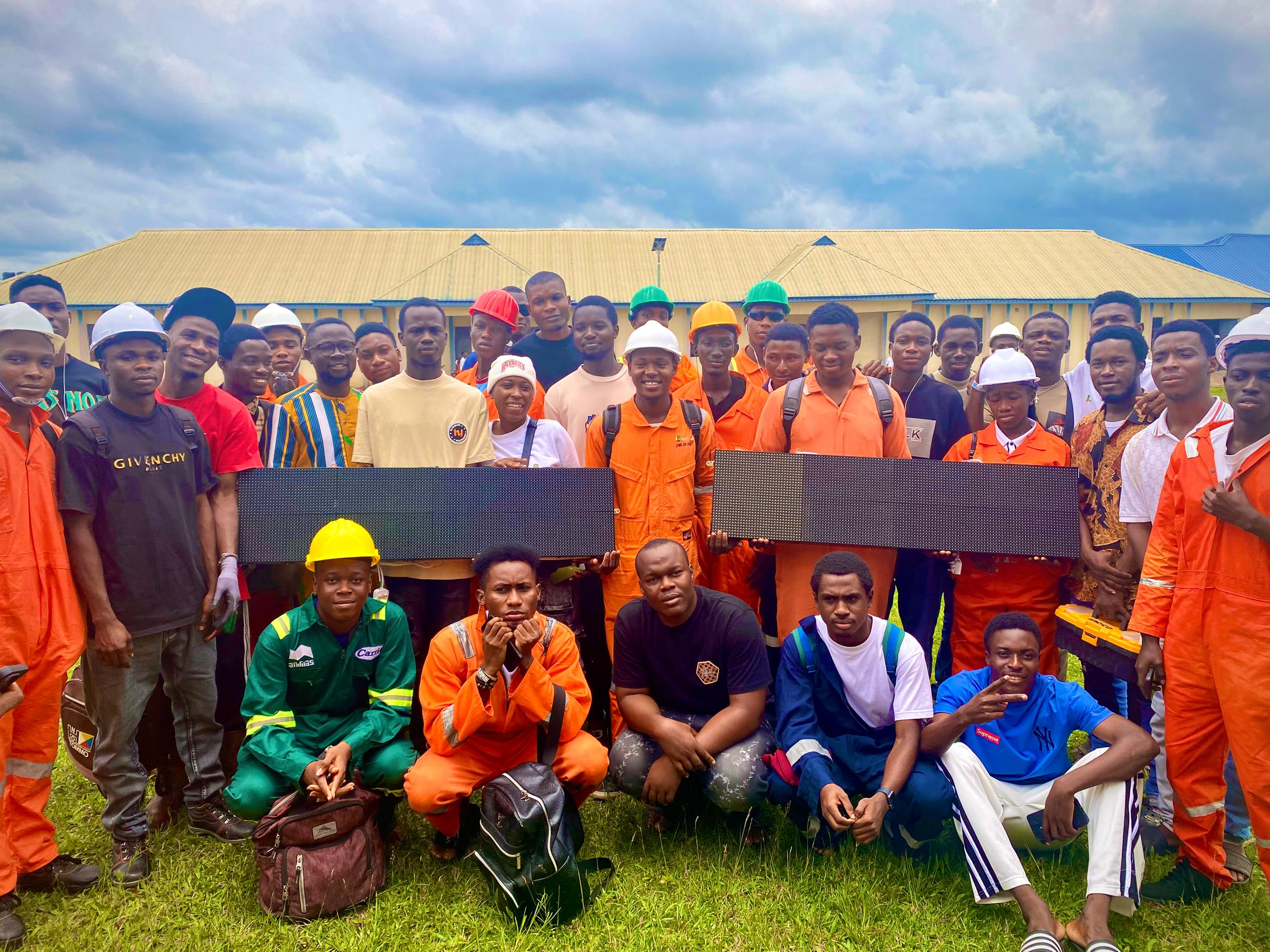
AEI has delivered practical training as an external resource organisation at the Faculty of Engineering, SDU Ozoro. Two consecutive years: 2024 and 2025.
Institutional engagement available
Training Impact

What our engineers go on to do

Every engineer who completes an AEI module graduates with a working hardware project and a documented technical portfolio: demonstrable evidence of practical engineering capability.

0+
Students Trained
Trained across successive cohorts since 2023
0+
Projects Completed
Real hardware systems built by trainees
0
Technical Tracks
From circuit fundamentals to cloud-connected IoT
0+
Institutional Engagements
Including SWEP and SIWES university engagements
Students in Action

Live projects. Real hardware. Real engineers.

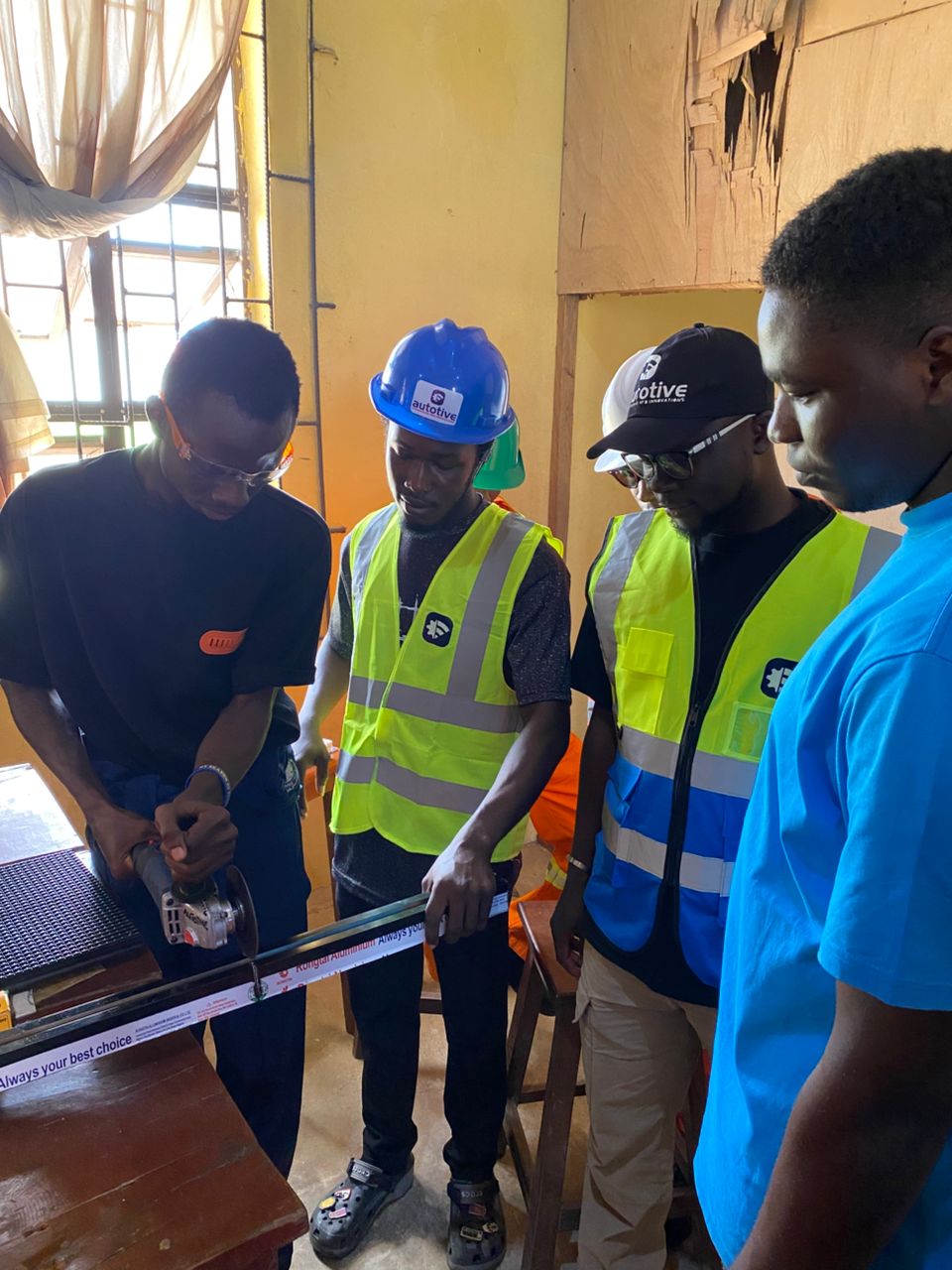
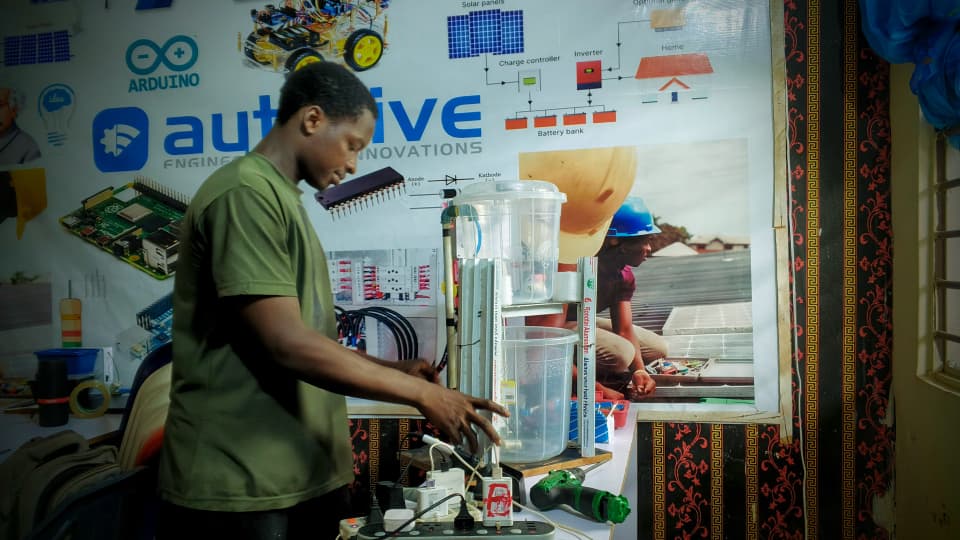
Every photo below is from an active AEI lab session. Students building, testing, and debugging real engineering systems. Not studying diagrams.
AEI students in lab session
01
Embedded Systems
Hands-On Lab Session, Ozoro
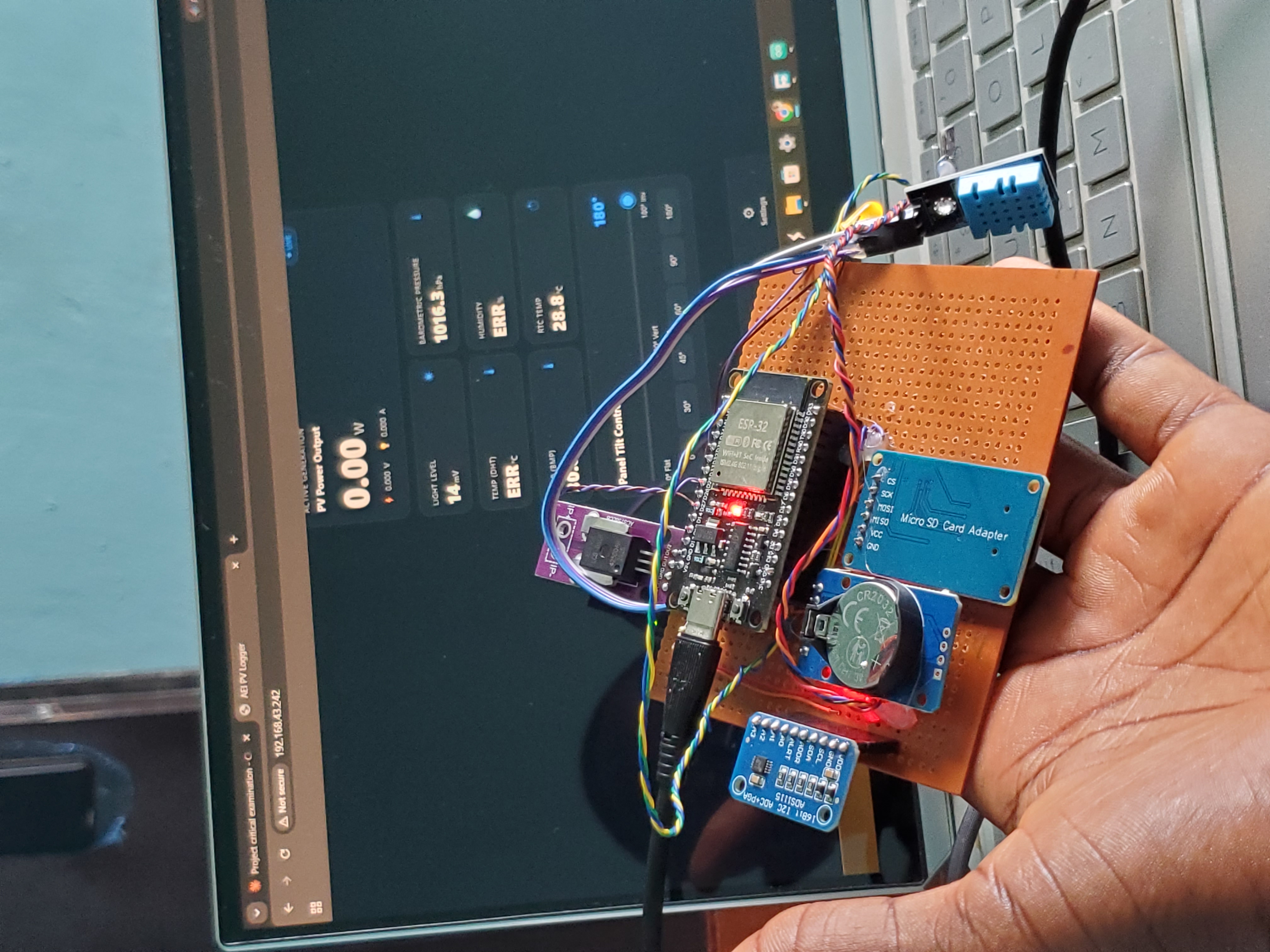
Students building ESP32 firmware during Module 02
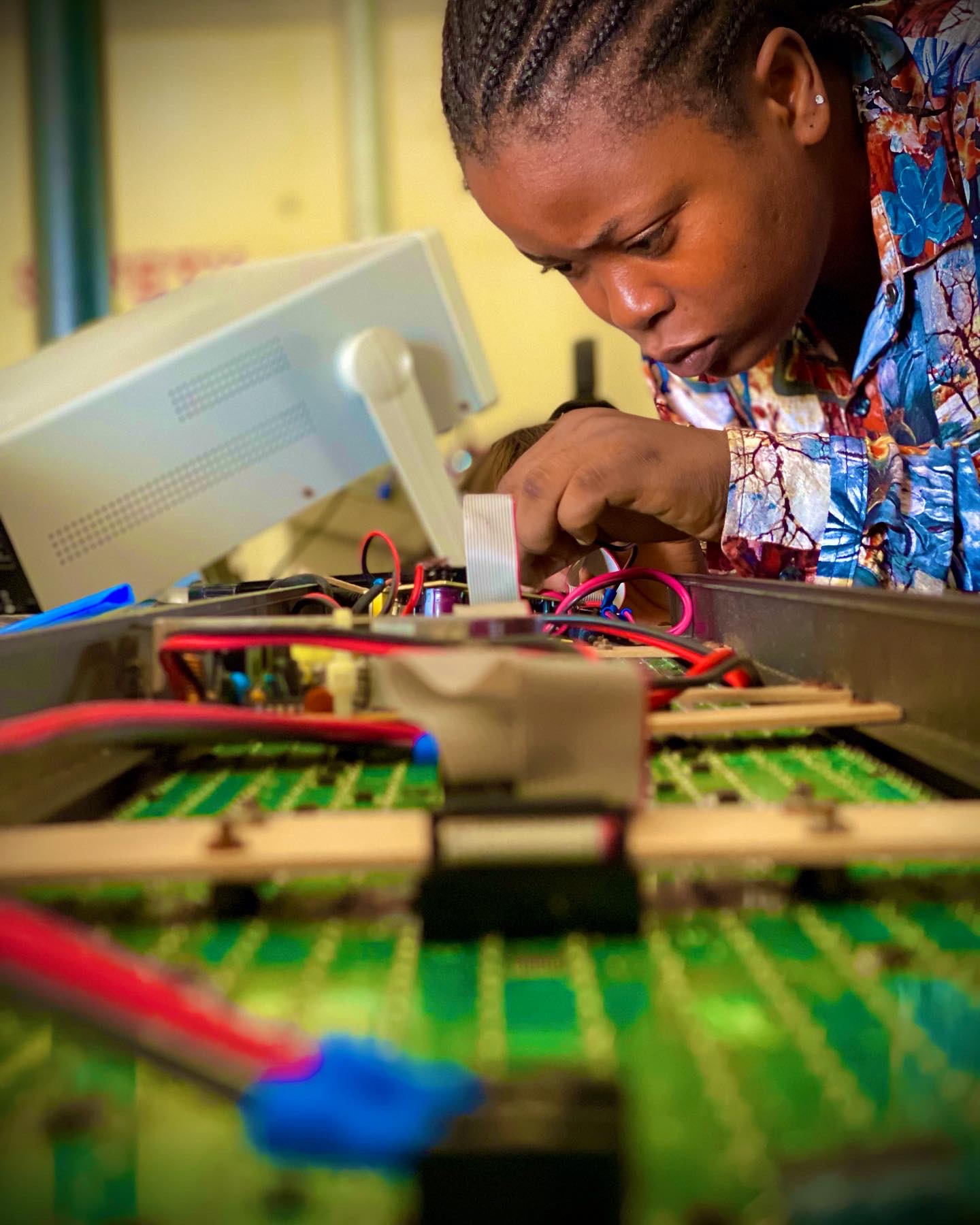
Student soldering
02
Circuit Design
PCB Soldering Practical
Module 01 · Electronics & Circuit Design
Student testing circuit
03
Smart Energy
Energy Meter Testing & Calibration
Module 04 · Smart Energy & Solar Systems
Students presenting project
04
IoT Systems
Project Presentation & Review
Trainees presenting completed IoT systems
Solar field test
05
Renewable Energy
Solar PV Installation Training
Module 04 · Off-grid system deployment
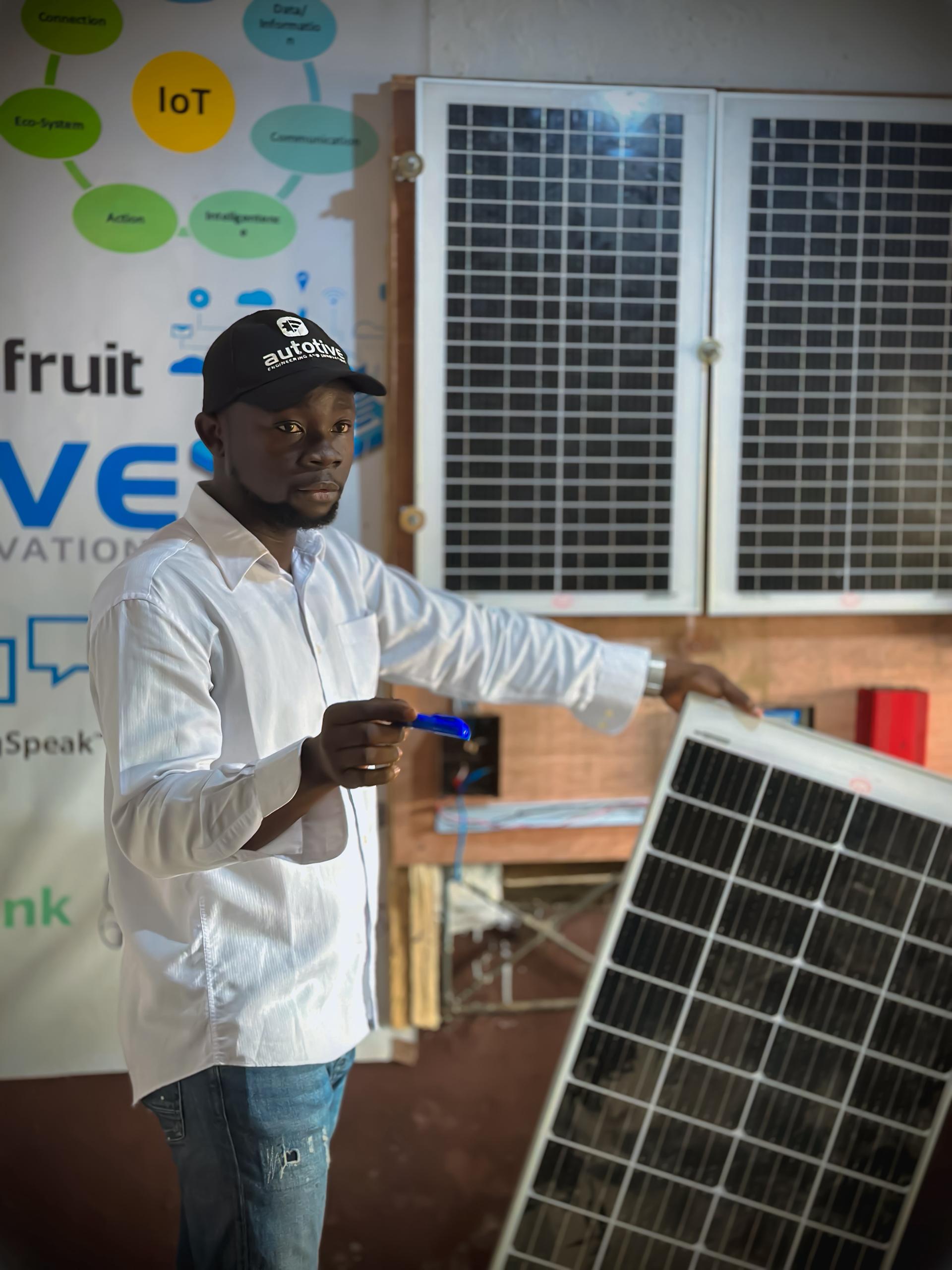
Instructor teaching
06
Mentorship
Live Instruction & Mentorship
AEI engineers teaching hands-on firmware development
Training Modules

Six pathways. One mission.

Choose the track that fits your level. All modules are stackable, so you can go as deep as you want.

Module 01 · Foundations
Electronics & Circuit Design
4 Weeks · All Levels

The entry point for all AEI trainees. Master analogue and digital circuit fundamentals, PCB layout, component identification, and test equipment operation.

Circuit Theory PCB Design Multimeter Oscilloscope
  • Ohm's law, Kirchhoff's laws in practice
  • Reading & designing schematics
  • Breadboard and PCB prototyping
  • Lab practical exam & certificate
Module 02 · Intermediate
Embedded Systems & Firmware
6 Weeks · OND/HND/BSc

Program ESP32 and Arduino microcontrollers from scratch. Write clean firmware, interface sensors, and build IoT devices that solve real problems.

ESP32 Arduino C/C++ Sensors
  • GPIO, ADC, PWM, UART, I2C, SPI
  • Sensor interfacing: DHT11, PIR, MQ, RFID
  • WiFi, Bluetooth, GSM integration
  • Capstone project + portfolio piece
Module 03 · Advanced
IoT & Connected Systems
6 Weeks · HND/BSc

Design and deploy end-to-end IoT solutions. Build cloud-connected systems, real-time dashboards, and data-driven monitoring platforms.

Firebase MQTT WebSocket Dashboard
  • Cloud backend: Firebase / MQTT brokers
  • Real-time web dashboards
  • Mobile app integration (Flutter basics)
  • Security & OTA firmware updates
Module 04 · Specialist
Smart Energy & Solar Systems
8 Weeks · HND/BSc/MSc

Design, install, and monitor solar systems, smart prepaid meters, and energy management platforms. Focused on off-grid and unreliable grid environments.

Solar PV Smart Metering ACS712 GSM
  • Solar panel sizing, charge controllers, batteries
  • Smart energy meter firmware development
  • Remote top-up via GSM / mobile money
  • PV efficiency logging and monitoring
Module 05 · Specialist
Smart Home
6 Weeks · HND/BSc

Build relay-based control systems, automate lighting and climate, design home security, and deploy industrial process automation systems.

Relay Control SCADA Tuya/Smart Life PLC Basics
  • 6-relay ESP32 control systems
  • Voice control & app integration
  • CCTV & access control systems
  • Client installation practicum
Module 06 · Research Track
Hardware R&D & Technical Writing
8 Weeks · BSc/MSc/Researchers

Develop a publishable hardware project from concept to prototype. Learn technical writing, research methodology, and how to document engineering work to publication standard.

Research Methods Technical Writing Prototyping
  • Research problem identification
  • Literature review & citation (APA/IEEE)
  • Prototype build & testing
  • Conference/journal paper preparation
Beyond Training

What sets AEI-trained engineers apart

Certification is a baseline outcome. What distinguishes AEI graduates is a documented portfolio, demonstrated technical confidence, and practical experience diagnosing and resolving real hardware failures. Every module develops all three.

Hands-On Laboratories

Every classroom concept is reinforced through a laboratory session conducted on the same day. Trainees work with real components and professional test equipment from the first session.

Project-Based Learning

Every module concludes with a working hardware project rather than a written examination. Trainees diagnose and resolve real engineering failures during the build process.

Industry Mentorship

Trainees are mentored by AEI's practising engineers: the same engineers who design and deploy the systems featured in the curriculum.

Professional Portfolio

Each module produces a documented and photographed hardware project. Graduates have a technical portfolio ready for presentation to employers or clients from the day they complete training.

Eligibility

Who benefits from AEI training?

AEI's programme is open to individual engineers and institutions. We also work with universities as a SWEP and SIWES delivery partner.

University Graduates

BSc/HND graduates in engineering or related fields who want to move from theory to hands-on hardware skills.

Undergraduates

Students who want practical experience alongside their degree and to graduate with real projects in their portfolio.

NYSC Corps Members

Corps members who want to use their service year to build real engineering skills they can take anywhere.

Working Professionals

Technicians and junior engineers who want to build on what they already know, or formalise skills they've picked up on the job.

Institutional Engagement

Training & institutional partnerships

AEI partners with universities, polytechnics, and development organisations to deliver structured practical engineering training. We've delivered SWEP practical sessions at the Faculty of Engineering, Southern Delta University for two consecutive years.

SIWES Training

AEI provides structured SIWES placements offering laboratory access, mentored project work, and formal assessment aligned to programme requirements.

SWEP Engagements

AEI served as external resource organisation for the Faculty of Engineering, Southern Delta University, Ozoro, delivering SWEP practical training in both 2024 and 2025.

Engineering Research Support

AEI provides technical supervision for undergraduate and postgraduate final-year projects, covering hardware design, firmware development, circuit review, and technical writing guidance.

Project Supervision

AEI provides technical co-supervision for engineering projects requiring embedded systems, IoT, energy systems, or automation expertise, bringing industry-standard engineering practice into the academic research environment.

Partner with AEI
Is your institution seeking a practical training partner?

AEI is available for SWEP delivery, SIWES hosting, curriculum collaboration, and engineering project supervision engagements.

Discuss a Partnership
Quarterly Intake

Begin your application

Intake is quarterly. Submit your application and our team will reach out with your placement, module recommendation, and start date.