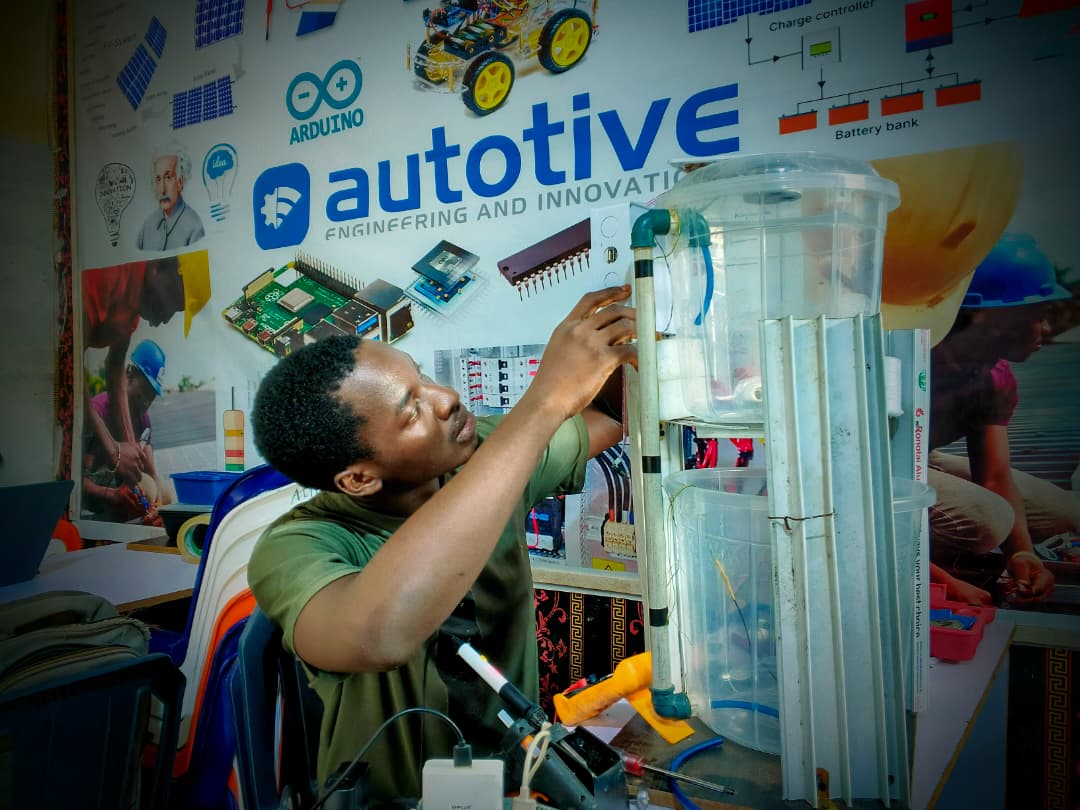
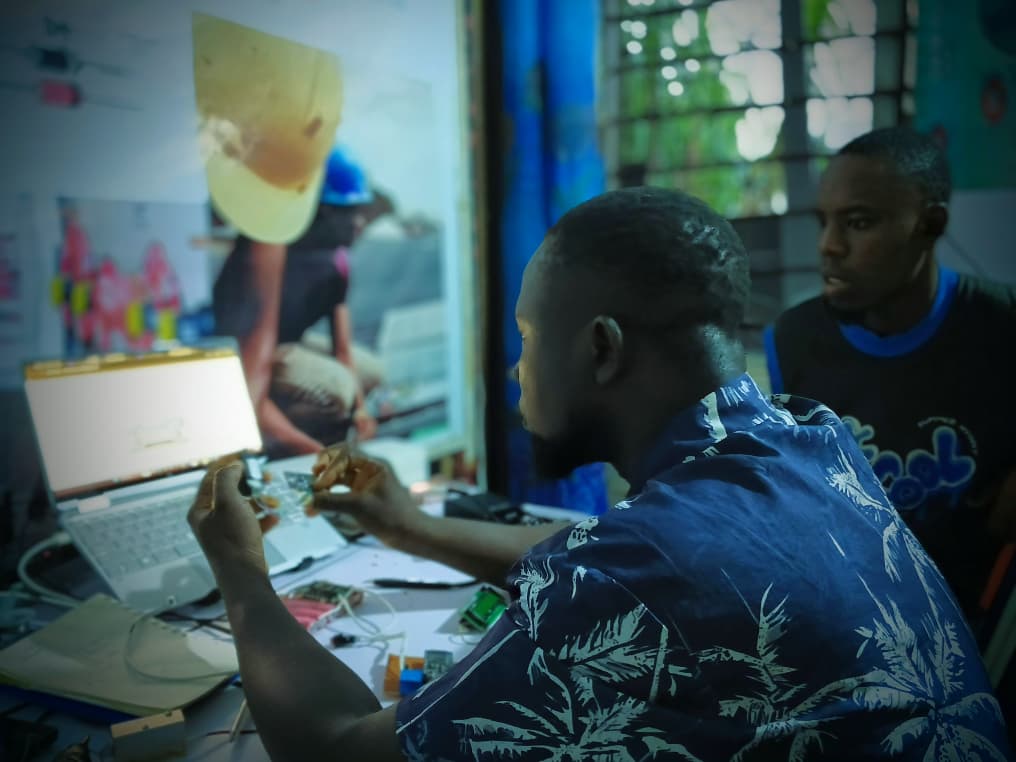
AEI is a hardware engineering and research organisation based in Ozoro, Nigeria. We build connected systems for environments where standard solutions don't hold up: smart energy meters, automation platforms, water monitoring systems, and security hardware. Every one of them gets field-tested before it ships.
AEI's engineering agenda is shaped by persistent infrastructure challenges. These are the six areas where we're building solutions.
Reliable electricity remains inaccessible for millions of people globally. Conventional metering systems require stable grid connectivity and centralised vending infrastructure that off-grid communities simply don't have. AEI builds GSM-enabled smart meters that operate entirely over mobile networks, enabling communities to manage and pay for electricity without grid dependency.
Many businesses operate automation equipment designed for stable, well-serviced environments. When these systems fail in challenging conditions, local maintenance capability is often absent and replacement parts are difficult to source. AEI builds control and automation systems using locally available components, maintained by locally trained engineers.
In many agricultural regions, irrigation remains entirely manual and crop conditions go unmonitored. AEI is developing low-cost IoT systems that automate irrigation based on real-time soil moisture data, reducing water consumption, cutting labour costs, and supporting consistent yields.
Many institutions still rely on manual, paper-based access control with no verifiable audit trail. AEI develops RFID and biometric access systems that log every entry digitally, store records in the cloud, and can be administered by any organisation without specialist IT support.
Technology only delivers value if qualified engineers can install, maintain, and improve it over its operational life. AEI's training programme develops exactly those engineers: practical, hands-on, built around the same systems AEI designs and deploys.
In many communities, significant volumes of water are lost to leaks and inefficient distribution before reaching end users. AEI is developing a connected water management system that monitors flow rates, detects leaks in real time, and controls distribution valves automatically, reducing losses and improving equitable access.
Autotive Engineering & Innovations (AEI) is a hardware engineering and research organisation based in Ozoro, Nigeria. We design, build, and deploy IoT systems engineered for environments where power is intermittent, internet connectivity is limited, and local maintenance capability is essential. Our portfolio spans smart energy metering, building automation, water management, and security. Our own trained engineers install and maintain them.
AEI's operations are sustained by three reinforcing activities: research grant funding, hardware contracts, and an engineering talent development programme. Each strengthens the others.
AEI operates at the intersection of hardware development, applied research, and engineering education. Each capability reinforces the others.
Every figure on this page corresponds to a deployed system, a funded project, or a published result.
AEI was recognised at the NexGen Innovation Challenge in London for its work in smart energy and embedded systems.
Engineers who completed at least one AEI module and graduated with a documented, working hardware system.
Including a GSM-enabled smart energy meter validated across multiple field sites, an RFID access management system tested in active institutional use, and a smart home automation system deployed for a private client.
AEI's GSM-enabled smart prepaid energy meter research, published in Acta Scientific Artificial Intelligence (2026). Peer-reviewed and openly accessible.
An IoT-based Smart Water Management System (V2V Grant, 2026) and a Solar PV Performance Study. Both actively funded and in progress.
AEI's training programme is built around practical engineering outcomes, not examination performance. Every module concludes with a working hardware system the trainee has designed and built. Graduates leave with documented proof of engineering capability.
From circuit theory to PCB prototyping. Graduates can read, design, and test real circuits using professional test equipment.
ESP32 and Arduino firmware development from first principles. Sensor integration, wireless connectivity, and end-to-end IoT device construction.
Solar PV system design, smart prepaid metering, and energy monitoring. Grounded in AEI's peer-reviewed field research and off-grid deployment experience.
Direct feedback from engineers who have completed AEI's training programme.
My industrial training experience was both engaging and highly practical. I gained hands-on knowledge, strengthened my technical skills, and learned how to apply engineering theory to real working systems. The environment was supportive and the instruction was excellent.
I've had an in-depth, immersive introduction to electrical engineering, CCTV automation and installation, solar power systems, and much more. It has been an outstanding practical learning experience.
AEI is the missing link between Nigerian engineering education and real industry practice. The lab work is as demanding as anything I encountered in my postgraduate studies.
Founder & Chief Engineer, AEI · Technologist, Southern Delta University
George Otive G. is an Electrical and Electronics Engineering Technologist at Southern Delta University, Ozoro, where he is affiliated with the Department of Electronics and Telecommunications Engineering. He founded Autotive Engineering & Innovations to bridge the gap between academic engineering education and the practical demands of hardware deployment and systems maintenance.
His technical work spans embedded systems design, IoT firmware development, renewable energy systems, and industrial automation. In 2025, he received international recognition at the NexGen Innovation Challenge in London. In 2026, his research on a GSM-enabled smart prepaid energy meter was published in Acta Scientific Artificial Intelligence, a peer-reviewed international journal. He holds the distinction of being among the few practising engineers in Delta State with both deployed field hardware and an internationally published research paper.
AEI has a defined commercial model, documented technical outputs, grant-funded research, and a flagship product now in field pilot. The next phase covers SEMS certification and production, developer and EPC channel partnerships, and international research collaboration. We are open to conversations with investors, development finance institutions, and strategic partners.